


Step by Step Guide: How to make a Grazing Board

What's a grazing board?
A grazing board is an edible centrepiece full of seasonal ingredients, artisanal products and decorative accents to stun your guests. Surpassing average finger food, the perfect grazing board should make your guest feel compelled to pull out their camera and capture the board, feeling spoiled for choice as they dive in.
This grazing platter guide doesn’t come with a recipe, so much as giving you the freedom to get creative with a variety of fruit and vegetables, cheese and meat. We hereby give you permission to play with your food.

Selecting the ingredients
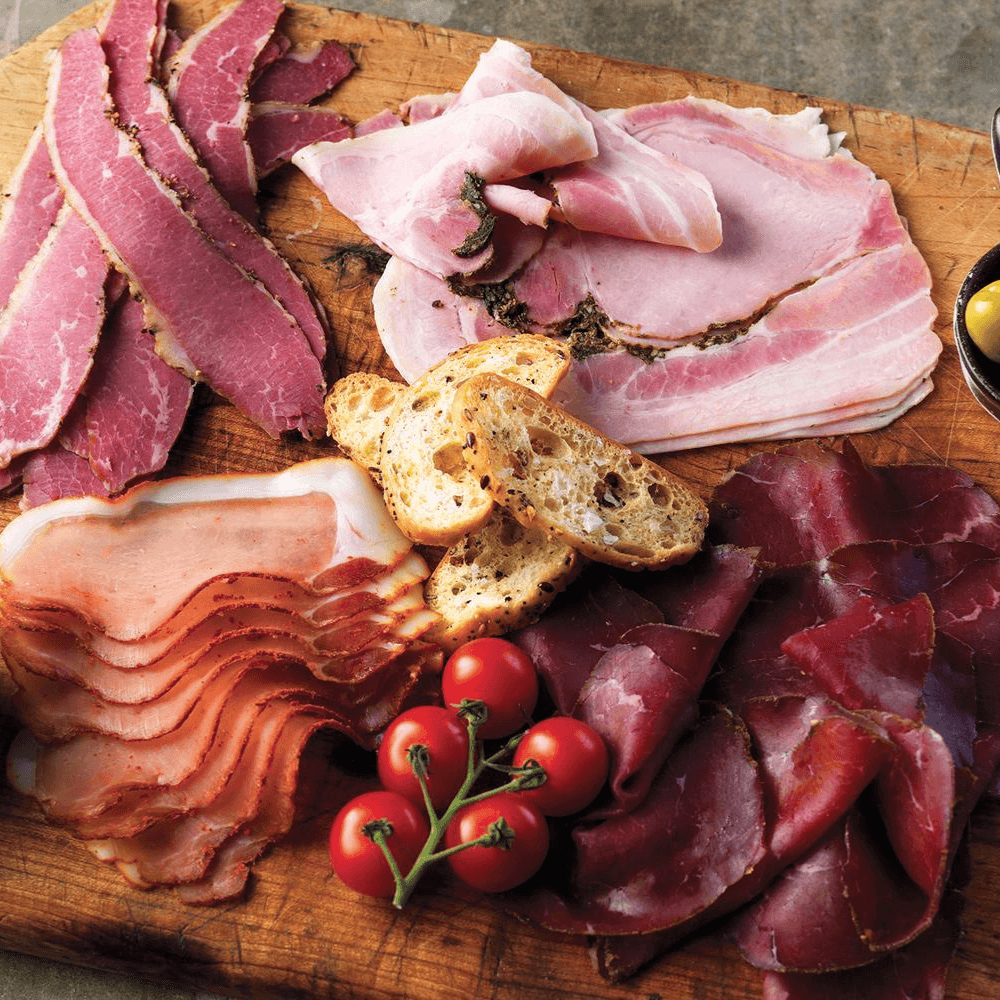
Start by selecting your heroes of the platter - be it meat, fish or cheese. These will be the main talking-points of the platter, so you’ll want food with provenance that comes with a good story to tell your guests.
Did you know DukesHill ham is a laborious process, made by hand and some hams are cured for six months?

How to arrange the ingredients
Begin with the right size serving board or platter for the number of guests you have and space allocated to the crudites.
Place small bowls on the platter for you to fill with pates, spreads, honey or other bowl-food.
Arrange produce by alternating colours, shapes and textures. Use a variety of heights and depths to add dimension to the board. Stack cheese slices, fold cured meats and mound fruits to create layers that draw the eye in and invite tastings.
The final garnishes. Elevate the presentation with fresh micro herbs, edible flowers, citrus zest, seeds, and spices. These accents add pops of colour and soften any edges.

Serving
Ensure the cheese and meat is served at room temperature to allow the flavours to open up.
Provide napkins and serving utensils - perhaps small plates if necessary so guests are comfortable to dive in.

How to create a charcuterie rose
Presenting the meat is the fun part. You can roll, fold and get creative with displaying the meat slices. To create a charcuterie rose, simply fold each slice of cured meat over the rim of a wine glass, laying down half each side of the rim. Continue working your way around the glass until there’s no hole in the centre of the glass. Now, tip the contents of the glass onto your board. It should resemble a rose. At this point, continue to manipulate the ‘petals’ - fanning it out so it looks more realistic.
Introduce tangy accompaniments. Acidity and tanginess coming from pickled vegetables, such as cornichons, pickled shallots, olives and capers work beautifully with cured meat.

The cheese platter
Opting for a variety of textures and characters is a guaranteed way to please everyone. A classic choice includes a blue cheese, a soft cheese such as the glorious Pavé Cobble Ewe Cheese as an oozy crowd-pleaser, a semi-hard cheese, such as Lord London, a cheddar, a goat’s cheese and perhaps something to dazzle your guests like our Cheesemakers Special Cheese. Serve it in a variety of ways - whole, wedges, cubes and slices to show the colour and texture difference between the rind and core.
How much cheese to serve?
If you plan to serve cheese as part of a meal, a typical recommendation is to provide 80g per person.
The counterbalance - incorporate elements of sweetness to balance the savory flavors. Add fresh fruits like grapes, figs, and strawberries, along with damson fruit cheese.
You may wish to label your cheeses so guests know what to expect.

The fish platter
This is an elegant serving platter for seafood lovers. Look for a variety of smoked fish, such as hot smoked salmon, gravadlax, smoked trout, eel and kippers.
A couple of pates work well, in addition to seafood such as cooked prawns, mussels and oysters.
To accompany the seafood, choose
lemon or grapefruit wedges, cream cheese, horseradish sauce, slices of buttered brown bread and crackers. Bitter leaves such as chicory works well.
For a beautiful pop of colour, pop some cauliflower florets in a jug and pour over boiling water. Add half a teaspoon of turmeric before stirring it together. Leave for 4 minutes so the cauliflower softens slightly and takes on the vivid hue.
Your seafood platter will need to be served straight from the fridge, unlike the meat and cheese platters.